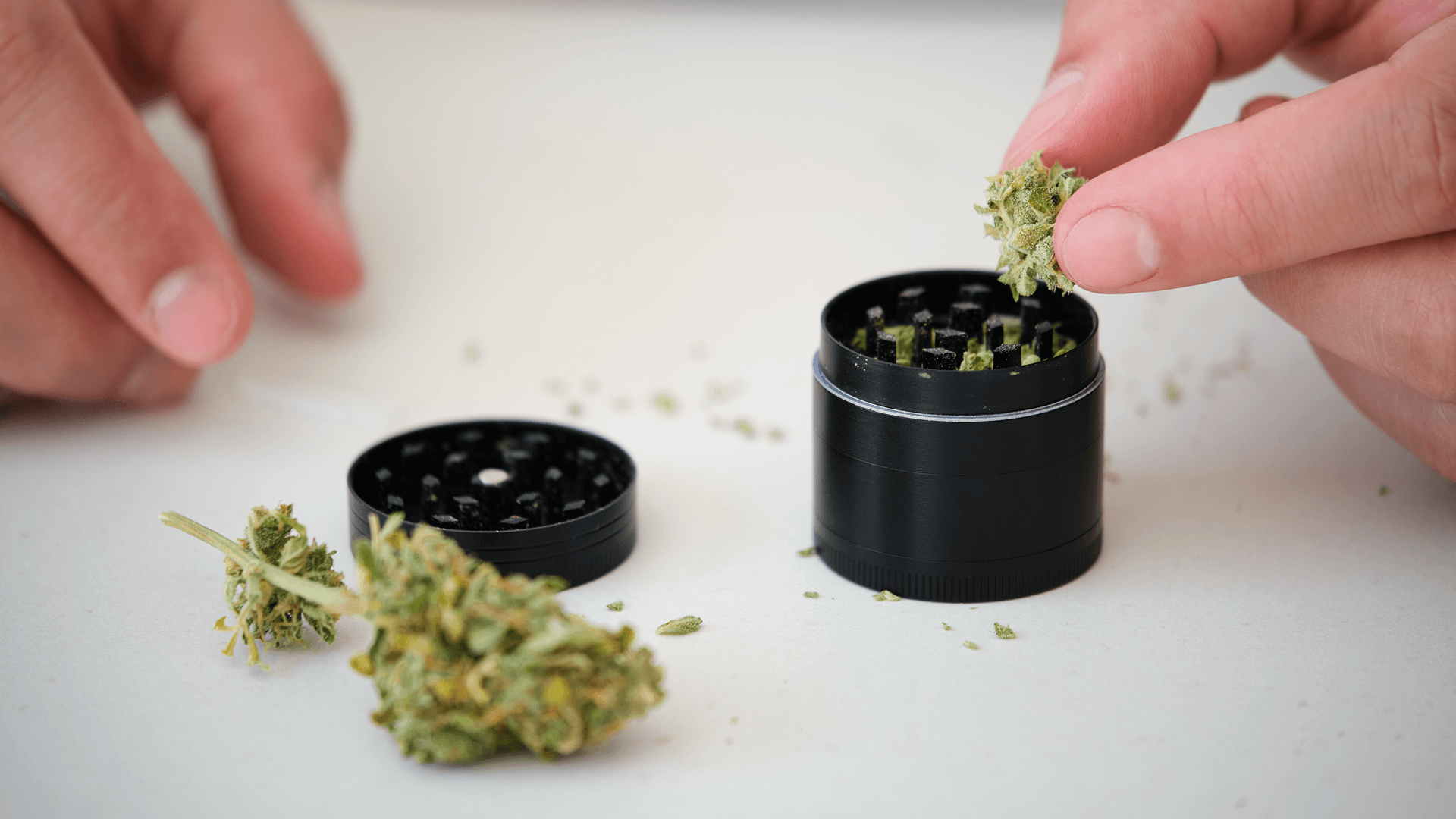
Regular weed smokers know that how your flower burns, tastes, and experiences are largely affected by how you grind it. That increases the importance of the cannabis grinder you choose.
That being said, choosing a cannabis grinder isn’t as simple as it may seem. Why? Availability of multiple options.
When you weigh your options, it’s easy to get overwhelmed. Two-piece or four-piece? Aluminum or stainless steel? Manual or electric?
On top of that, picking the wrong cannabis grinder means uneven burns. Harsh hits. Lost kief. Wasted flower. Some low-quality grinders shed tiny metal or plastic particles into your bud.
The right cannabis grinder gives you a consistent grind, better airflow, fuller flavor, and more control over your sessions.
Interested to learn more? Keep reading as we explore how grinders work, types of cannabis grinders, how to use a grinder, and more.
So, without further delay, let’s get started!
What Is a Cannabis Grinder?
A cannabis grinder is a tool that helps you break down your weed flowers into small and even sizes. The goal is to end up with ground weed that burns evenly and gives an unforgettable experience.
Yes, you can grind cannabis with your hands. However, it may affect the flavor and potency of your flower. Trichomes contain cannabinoids and terpenes that give cannabis its potency. And when you use your bare hands, they can stick to your skin and get wasted.
A quality grinder keeps them in the chamber or collects them in a dedicated kief catcher below the screen.
Do I Need a Grinder?
If you’re new to cannabis, it’s easy to get excited and want to buy everything once you walk into a dispensary. You might start wondering whether you need a cannabis grinder, especially if your friends use one. So, do you really need it?
You may want a cannabis grinder if you want your flower to burn evenly. It can help deliver stronger, more flavorful effects. It can also help your supply last longer.
Different Types of Cannabis Grinders
You can narrow down your options of cannabis grinders based on compartments and grinder material. Based on compartments, some of the most common types of grinders include:
- 2-Piece Grinders
- 3-Piece Grinders
- 4-Piece Grinders
2-Piece Grinders
2-piece grinders are the simplest option. It is named 2-piece because of its two parts:
- Lid
- Grinding compartment
You place your flower between the teeth in the bottom half. Put the lid on. Twist the top and bottom in opposite directions. The teeth shred the buds in even sizes.
3-Piece Grinders
3-piece grinders add another compartment below the grinding chamber. The purpose of this compartment is to catch all the buds that fall through the holes. This extra compartment helps avoid waste as you twist and turn.
4-Piece Grinders
This is the most widely used cannabis grinder. A 4-piece cannabis grinder comes with a kief catcher and adds a fine mesh screen between the catch chamber and a bottom collection chamber. Trichomes small enough to pass through the screen accumulate at the base.
Types of Cannabis Grinder Based on Material
Now that we’ve categorized cannabis grinders by their compartments, let’s break them down by the materials they’re made from.
Aluminum is the most common material in personal-use grinders, and for good reason. Anodized aluminum resists corrosion, holds sharp teeth over time, and doesn’t shed particles when manufactured correctly.
Metal shavings from quality aluminum grinders are extremely rare. According to Leafbuyer, they typically only appear in brand-new units before the first use.
Stainless steel grinders cost more but tend to last longer. They resist rust completely and clean up with minimal effort.
Plastic grinders carry the most risk. Acrylic and polypropylene can contain BPA and other chemical additives that leach into ground material through friction and heat. Plastic teeth also wear down faster, which increases the chance of particulates ending up in your flower.
Wood grinders are mainly an aesthetic choice. Wood is too soft for precision milling, so manufacturers use metal pins as teeth inside the wooden body. They get the job done, but grind quality doesn’t match that of metal grinders.
An electric cannabis grinder runs on battery power. It shreds flowers with motorized blades in seconds. It requires almost no hand strength, which makes it the practical choice for medical patients with arthritis or limited grip strength.
How to Use a Cannabis Grinder Step-by-Step
Using a cannabis grinder correctly takes about 60 seconds once you know the steps. Skipping any step wastes material or makes the process harder.
Step 1
Break down large buds by hand first. Remove any stems. Large stems can bend or break grinder teeth over time, and they do not contribute to your grind. Break flowers into smaller clusters that fit comfortably inside the chamber without overloading it.
Step 2
Load the grinding chamber. Place the broken flower pieces on the lower teeth of the top section. Avoid placing anything directly in the center; the magnet or pivot point sits there and does not grind. Overloading the chamber makes rotation harder and produces an inconsistent grind.
Step 3
Grind with 5–10 rotations. Hold the bottom section firmly and rotate the top section back and forth. You will feel resistance decrease as the flower breaks down. Ten full rotations produce a medium grind suitable for most uses.
Step 4
Tap the grinder before opening. After grinding, flip the grinder upside down and tap the bottom against your palm twice. This dislodges ground material stuck to the teeth and pushes it through the holes into the catch chamber. This single step recovers a measurable amount of material that otherwise stays trapped.
Step 5
Collect the ground cannabis. Unscrew the catch chamber and use a small card or your hand to collect the material. If your grinder has a kief catcher, unscrew the bottom chamber separately. Use the small scraper to collect the kief once enough has accumulated.
Step 6
Grind fresh for each session. Ground cannabis has 3–4 times more surface area than whole buds. That increased surface area accelerates oxidation when the material is stored. Grind only what you plan to use immediately.
How to Grind Cannabis for Different Consumption Methods
Not all methods need the same grind. Using the wrong texture creates airflow problems, uneven burns, and inconsistent vapor production.
For smoking in a bowl or pipe:
A medium grind allows airflow and burns evenly. Too fine, and you pull ash through the bowl. Too coarse, and large pieces do not combust fully.
For rolling joints or blunts:
A medium to slightly finer grind gives you a material that rolls without gaps or lumps. Larger pieces cause the paper to tear when you tuck and roll. Kief mixed into the ground flower at this stage adds potency without changing the rolling process.
For dry herb vaporizers:
A medium-fine grind increases surface area contact with the heating element. Most vaporizer manufacturers specifically recommend against powder, which restricts airflow through the chamber and can block the vapor path. 8–12 rotations on most grinders hit the right consistency.
For making edibles or infusions:
A coarser grind is preferable. Fine particles increase the amount of chlorophyll that gets extracted alongside cannabinoids, which contributes a bitter, plant-heavy flavor to butter or oil. A rougher grind extracts cannabinoids while leaving more plant material intact.
Common Mistakes People Make When Using a Cannabis Grinder
These mistakes reduce grind quality, waste material, and shorten the life of your grinder.
Overloading the Chamber
Packing too many flowers into the grinding chamber forces the teeth to work against each other rather than cut through the material cleanly. The result is an uneven grind, extra resistance, and threads that wear down faster because users apply more torque to force the rotation through. Load the chamber to about 70% capacity.
Grinding Wet or Freshly Cured Flower
Moisture causes trichomes to smear instead of separating. Wet flower clumps against the screen, block holes in the kief mesh, and deposit sticky green residue throughout the chamber. For best results, flowers should be dry enough that stems snap cleanly without bending. If your flower is too moist, spread it on clean paper for an hour before grinding.
Ignoring the Center Post During Loading
Most grinders have a pivot post in the center of the grinding chamber. Any flower placed on top of this post does not get ground…it just sits there and jams the rotation. Place flowers around the outside of the post, on the teeth.
Never Cleaning the Screen
The mesh screen in a 4-piece grinder separates kief from the ground flower. Resin, plant wax, and particulate accumulate on the screen over time, blocking the mesh holes. Once blocked, kief cannot pass through, and you lose everything that should be collected below. A clogged screen is the most common reason kief catchers appear empty despite regular use.
Grinding Too Far in Advance
Ground cannabis oxidizes faster than whole flowers. Pre-grinding a week’s supply and storing it in a container exposes all that surface area to air, light, and moisture. Potency and flavor degrade noticeably within a few days. Grind immediately before use.
Choosing Based on Price Alone
The cheapest option typically means zinc alloy or low-grade plastic construction. Zinc grinders cost $5–10 but corrode quickly. Anodized aluminum 6061 grinders range from $30–120 depending on size and origin. Stainless steel runs $60–170. The mid-range aluminum grinder outperforms the cheap zinc option for years of regular use — the economics favor quality over time.
Benefits of Using a Cannabis Grinder vs Hand Grinding
The comparison comes down to trichome preservation, consistency, and time.
Trichome Recovery
When you break cannabis by hand, trichomes transfer directly to your skin. After breaking two grams of flowers by hand, visible resin and trichome heads coat fingers and palms. A grinder keeps that material in the chamber. A 4-piece unit with a kief catcher collects it below the screen, where it can be used later in concentrated form.
Grind Consistency
Hand-broken cannabis produces irregular chunks ranging from powder-sized to large pieces, all in the same batch. That inconsistency means the fine bits burn first, the large pieces burn last or not at all, and the experience is uneven throughout. A grinder produces uniform particles that burn or vaporize at the same rate across the entire bowl or joint.
Efficiency
A consistent grind burns more completely. Less material is wasted because no large chunks escape combustion or vapor extraction. For medical patients managing dosage precisely, this efficiency matters.
Time
Breaking a gram of dense flowers by hand takes 3–5 minutes and leaves residue everywhere. A quality grinder with sharp teeth handles the same task in 20–30 seconds. Over hundreds of sessions, the time difference is substantial.
Reduced Waste
Hand-broken flower leaves irregularly shaped pieces that pack loosely and unevenly. Air pockets in a poorly packed bowl or joint mean some areas receive heat and some do not. Parts of the flower combust while others stay unburned at the end of a session. A grinder eliminates that problem by producing uniform pieces that pack tightly and consistently.
Better Flavor Preservation
Terpenes are responsible for the flavor and smell of different cannabis strains, They are found in trichomes. They are volatile, meaning they degrade quickly when exposed to heat, air, and friction.
A clean grinder with sharp teeth shears the flower rather than crushing it, which preserves terpene integrity better than the blunt force of hand-breaking. The difference shows up as a more distinct flavor in the first few draws of a session.
How to Clean and Maintain a Cannabis Grinder
A grinder that is not cleaned regularly grinds less efficiently, collects less kief, and eventually seizes up from resin buildup.
Cleaning Frequency
Now, you may have questions about how often you should clean your cannabis grinder.
- Daily users should clean the grinder every 1-2 weeks.
- Weekly users should clean their grinders every 3-4 weeks.
- If you use your grinder occasionally, clean it every 2-3 months.
Step-by-Step Cleaning Process
Step 1
Separate all chambers. Lay them on a clean surface or paper towel.
Step 2
Place the disassembled pieces in the freezer for 20–30 minutes. Cold temperature makes the resin brittle and easier to remove. Scrape the chambers and teeth with a small brush or toothbrush before they warm back up. This step recovers kief stuck to interior surfaces.
Step 3
Brush loose material into the kief catcher. Use a small brush (a clean makeup brush or the included scraper) to sweep visible kief and plant material from the teeth, chamber walls, and screen into a collection container. Do not discard this material.
Step 4
Soak metal parts in isopropyl alcohol. Place the aluminum or steel pieces in a container with 91% or higher isopropyl alcohol. Let them soak for 20–30 minutes. The alcohol dissolves plant wax, resin, and residue without damaging metal surfaces.
Step 5
Scrub and rinse. Use a small brush to scrub the teeth and screen while still in the alcohol. Rinse each piece thoroughly with warm water. Rinse again. Isopropyl residue on metal evaporates quickly, but flowers can trap it in their threads, so thorough rinsing is important.
Step 6
Dry completely before reassembling. Water and residual alcohol inside the grinder during use can affect the grind, promote corrosion in lower-grade aluminum, and create resistance in the threads. Let pieces air dry on a clean surface for at least 30 minutes, or use a hair dryer on low.
Screen Maintenance
The kief mesh screen is the most critical part to keep clear. If soaking in isopropyl does not open clogged mesh holes, try soaking for longer, up to an hour. Some users push a soft bristle through clogged holes with a fine brush. Never poke metal tools through the screen; it will tear the mesh.
Thread Care
The threads on aluminum grinders wear down over time from resin buildup that acts as an abrasive. After cleaning, a very small amount of food-grade lubricant on the threads extends their life and prevents the grinding sensation some grinders develop after heavy use.
When to Replace Your Grinder
Teeth that round off or chip no longer cut flowers cleanly. They crush it instead, which damages trichomes. Threads that strip or no longer hold the chamber closed create a safety and usability problem.
A damaged screen with visible holes larger than the mesh pattern lets plant material fall into the kief chamber, contaminating the collection. When any of these occur, replacement is more practical than repair.
Westword recommends replacing a well-used grinder approximately every five years for daily users unless it shows wear sooner.
Which Cannabis Grinder Is Right for You?
The cannabis grinder you choose directly impacts how your weed burns, how it tastes, and how it feels. Some of the qualities of a good grinder include:
- Even bud breaking
- No Clumps
- Consistent airflow
And you may think the choice is easy, but it isn’t, especially with multiple options available. You can choose from 2-piece grinders, 3-piece grinders, 4-piece grinders, and Electric grinders.
When to use a 2-piece grinder
Use a 2-piece grinder when you want something simple and quick. It’s just a top and bottom with sharp teeth. You drop your bud in, twist, and you’re done. Everything stays in one chamber, so there are no extra parts to deal with, and it’s easy to clean.
It’s a good choice if you:
- Smoke casually and don’t need a kief catcher
- Are just getting started
- Want something compact and budget-friendly
- Prefer less hassle over extra features
If you don’t care about collecting kief and just want to grind and go, a 2-piece does the job without overcomplicating it.
When to use a 3-piece grinder
Use a 3-piece grinder when you want a little more than the basics, but still want to keep it simple.
It adds a middle chamber with a screen. When you grind, the flower stays in one section, while finer particles (kief) start to separate below.
That means you can collect the extra potency instead of mixing it back in.
A 3-piece grinder is an ideal choice if you:
- Smoke regularly
- Want to collect kief without buying a bulky grinder
- Like better organization and storage
- Want more value without too many extra parts
When to use a 4-piece grinder
A 4-piece grinder is for people who like getting the most out of their flower. It separates everything into layers. The top grinds. The middle holds your ground bud. And at the bottom, a separate chamber slowly collects kief over time.
It helps you save the extra potency for later. Most models even come with a small scraper so you can gather every bit of that fine dust.
When to use an Electric grinder
Electric grinders are the best option for people who want ease and speed. All you have to do is press a button. Yes, that’s it. And the best part is that the flower is grounded evenly.
They’re great if you don’t have a lot of hand strength or don’t want to twist a grinder yourself.
Key Takeaways
- A four-piece cannabis grinder with a kief catcher preserves trichomes that hand-breaking loses to your skin and surfaces.
- Aluminum and stainless steel grinders outperform plastic on durability, grind consistency, and material safety.
- Grind consistency directly affects burn rate and vapor production; a medium grind suits most consumption methods.
- Clean your grinder every 2–4 weeks with isopropyl alcohol to maintain screen efficiency and prevent resin buildup.
- Electric cannabis grinders reduce effort for medical patients and high-volume users, but manual grinders give better tactile control.