If you searched for verified information about the 2026 Winter Olympics, you came to the right place. This guide covers every confirmed detail you need: the host country and multi-city structure, official dates, how the winter olympics schedule 2026 was built, which sports featured prominently, and how the olympic medal count 2026 played out across 16 days of competition.
The 2026 Winter Olympics is officially known as the XXV Winter Olympic Games and commonly called Milano Cortina 2026. The event ran from February 6 to February 22, 2026, across multiple sites in northern Italy.
The Games marked the return of the Olympics to Italy for the second time in winter sports history and delivered historic results, record-breaking performances, and a final day of competition that nobody who watched it will quickly forget.
In this guide, you will find:
- Confirmed host country and multi-cluster venue structure
- Official dates, ceremony locations, and the unique distributed opening format
- A breakdown of featured sports including ice hockey, alpine skiing, snowboarding, figure skating, and the debut of ski mountaineering
- How the olympic medal count 2026 tracked and who finished on top
- Final medal table results and standout individual performances
- The scope of the Games compared to events like the Super Bowl 2026
- What makes Milano Cortina 2026 structurally different from every Winter Olympics before it
What Were the 2026 Winter Olympics?
The 2026 Winter Olympics was organized by the International Olympic Committee (IOC). It took place in Italy from February 6 to February 22, 2026. Competition in selected events actually began on February 4, two days before the Opening Ceremony, following a practice used at recent Games.
The event was awarded to a joint Milan–Cortina d’Ampezzo bid on June 24, 2019, during the 134th IOC Session in Lausanne. The Italian bid received 47 votes, defeating Stockholm–Åre, which received 34 votes.
Unlike every previous Winter Olympics, which followed either a single-city or straightforward co-host model, Milano Cortina 2026 was the first Olympic Games to be officially co-hosted by two cities and the first to hold its Opening Ceremony across four simultaneous locations.
The IOC called the broadcast of the ceremony “one of the most complex live broadcasts ever produced for an Olympic Winter Games edition.”
Athletes competed across 116 medal events up from 109 at Beijing 2022 in 16 disciplines. Around 2,880 athletes from 92 National Olympic Committees took part, including three first-time Winter Olympic entrants: Benin, Guinea-Bissau, and the United Arab Emirates. Saudi Arabia sent athletes to the Winter Olympics for the first time as well.
Key facts at a glance
The Games ran for 17 days, with competition beginning in earnest on February 6. Two Olympic cauldrons were lit simultaneously for the first time in Games history. One at Arco della Pace in Milan and one at Piazza Dibona in Cortina d’Ampezzo.
Norway finished first in the final medal table with 18 gold medals and 41 total, both of which set new Winter Olympics records for a single Games. The United States finished second with 12 gold medals and 33 total medals. It also set a new national Winter Olympics record.
Brazil won its first-ever Winter Olympic medal. It was a gold medal in alpine skiing.
Host Country: The 2026 Olympics Were Held in Italy
The answer to “2026 olympics held in which country” is Italy.
More specifically, the Games were hosted by a multi-cluster structure centered on Milan and Cortina d’Ampezzo, with additional competition venues in Livigno, Bormio, Antholz-Anterselva, Predazzo, and Baselga di Piné.
Speed skating was ultimately held at the Oval Lingotto in Turin (a facility built for the 2006 Winter Olympics) after venue discussions in northern Italy proved logistically and financially complex.
This was Italy’s fourth time hosting the Olympic Games overall and its third time hosting the Winter Olympics. Italy’s previous Winter Games hosting was at Turin 2006. Cortina d’Ampezzo itself was hosted even earlier, as the site of the 1956 Winter Olympics. Rome hosted the 1960 Summer Olympics.
Milano Cortina 2026 holds another distinction: it was the first Olympic Games to be officially co-hosted by two cities, as recognized by the IOC.
Opening and Closing Ceremony Locations
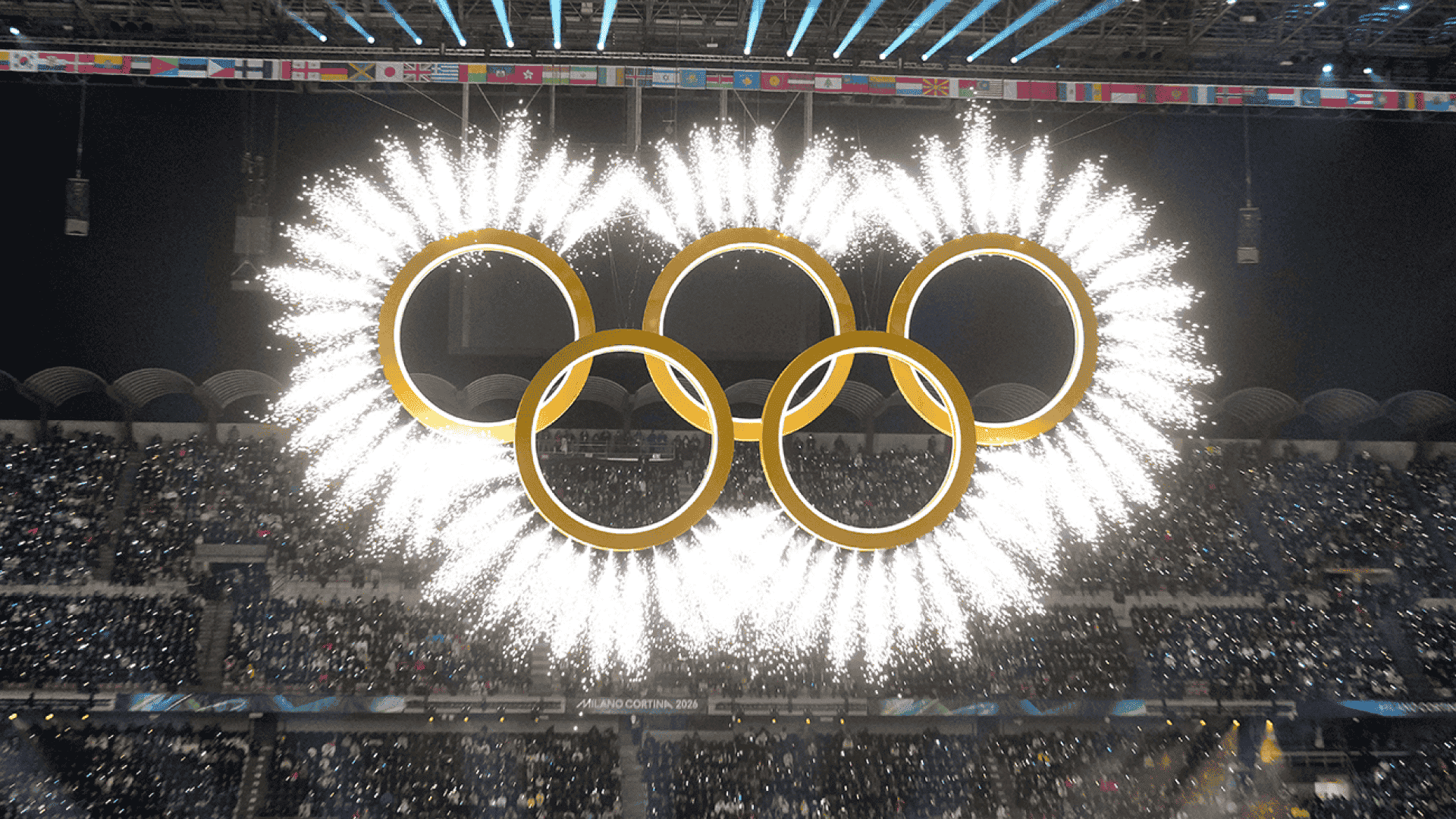
The Opening Ceremony was held at Stadio San Siro (Stadio Giuseppe Meazza) in Milan, on February 6, 2026. The ceremony was titled *Armonia* (“Harmony”) and produced by Banijay Live’s Balich Wonder Studio.
Performances were given by Mariah Carey (who sang in Italian), Andrea Bocelli, Laura Pausini, Cecilia Bartoli, Chinese pianist Lang Lang, and American cellist Yo-Yo Ma. The Games were formally opened by Italy’s president, Sergio Mattarella.
In a historic first, athlete processions took place simultaneously at four venues: San Siro, the Livigno Snow Park, the Predazzo Ski Jumping Stadium, and the streets of Cortina d’Ampezzo.
The Closing Ceremony was held at Verona Arena in Verona, on February 22, 2026. The ceremony was titled *Beauty in Action* and included the formal handover to the French Alps as host of the 2030 Winter Games.
The Multi-Cluster Venue Structure
Fifteen venues across northern Italy hosted competition at Milano Cortina 2026. The IOC assigned events to clusters based on geography and existing infrastructure, with a stated priority of minimizing new construction.
Milan Cluster
Ice hockey (at both the Milano Santaguilia Ice Hockey Arena and the Milano Rho Ice Hockey Arena), figure skating and short track speed skating (at the Milano Ice Skating Arena), and the Opening Ceremony at San Siro.
Cortina d’Ampezzo Cluster
Alpine skiing (at the Tofane Alpine Skiing Centre), bobsleigh, skeleton, and luge (at the new Cortina Sliding Centre), and curling (at the Cortina Curling Olympic Stadium, originally built for the 1956 Winter Olympics).
Valtellina Cluster (Bormio and Livigno)
Men’s alpine skiing events at the legendary Stelvio Ski Centre in Bormio, snowboarding and freestyle skiing at the Livigno Snow Park and Livigno Aerials & Moguls Park. Ski mountaineering, making its Olympic debut, also competed in this cluster.
Val di Fiemme Cluster (Predazzo and Tesero)
Ski jumping at the Predazzo Ski Jumping Stadium, and cross-country skiing and Nordic combined at the Tesero Cross-Country Skiing Stadium.
Antholz-Anterselva
Biathlon at the Anterselva Biathlon Arena.
Turin
Speed skating at the Oval Lingotto.
Verona
The Closing Ceremony at the Verona Olympic Arena.
This distributed structure was a defining feature of these Games. It also created logistical complexity: athletes stayed in multiple Olympic villages depending on where their events were held, and broadcast teams had to manage live coverage across locations separated by hours of travel.
Winter Olympics Schedule 2026: Dates, Structure, and Format
The Winter Olympics schedule 2026 ran from February 6 to February 22, 2026. That made it 17 days of competition. Selected events began on February 4, before the Opening Ceremony.
The Games featured 116 medal events across 16 disciplines. This was an increase of seven events and one discipline compared to Beijing 2022.
The 16 disciplines were alpine skiing, biathlon, bobsleigh, cross-country skiing, curling, figure skating, freestyle skiing, ice hockey, luge, Nordic combined, short track speed skating, skeleton, ski jumping, ski mountaineering, snowboard, and speed skating.
Eight new events were contested for the first time at these Games:
- Ski mountaineering (men’s sprint, women’s sprint, mixed relay) — a full Olympic debut
- Women’s Doubles in luge
- Women’s Large Hill in ski jumping
- Mixed Team event in skeleton
- Men’s Dual Moguls in freestyle skiing
- Women’s Dual Moguls in freestyle skiing
- Team Combined in alpine skiing
Milano Cortina 2026 also featured the most women’s events ever at a Winter Games: 50 events, compared to 46 at Beijing 2022. Women accounted for 47 percent of all athletes, making this the most gender-balanced Winter Olympics in history. Twelve of the 16 disciplines were fully gender-balanced.
How the Daily Competition Schedule Worked
Winter Olympic schedules traditionally move through morning qualification rounds, afternoon elimination stages, and evening finals positioned for prime-time broadcast windows.
Italy operates on CET (Central European Time). This meant evening finals took place in the early morning hours for North American audiences. For Asian markets, they aired late at night.
This timing was an important consideration for broadcasters and viewers.
For spectators and followers tracking results across clusters, the distributed venue model meant medal events were happening in multiple cities on the same day throughout the competition window.
Olympic Medal Count: How It Worked and Who Won
The Olympic medal count reflects national performance across all 116 medal events. As is traditional, the IOC does not publish an official ranking table, but media outlets and the official Olympics.com platform tracked nations by gold medals first, followed by silver and bronze totals.
Final Medal Table Highlights
Norway finished first in the final medal table with 18 gold medals and 41 total, both new records for any country at a single Winter Olympics. Norway had previously held the record with 16 gold medals at Beijing 2022.
Cross-country skier Johannes Hoesflot Klaebo became the second-most decorated Olympic gold medalist in history after American swimmer Michael Phelps. Biathlete Johannes Dale-Skjevdal’s gold in the 15km mass start gave Norway its record-breaking 17th gold, two days before the closing ceremony.
The United States finished second with 12 gold medals and 33 total medals; a new record for the most gold medals Team USA has ever won at a single Winter Olympics. The US sent its biggest-ever Winter Olympics team with 232 athletes.
America’s final gold came in dramatic fashion: the men’s ice hockey team defeated Canada 2-1 in overtime on the last day of competition to win the country’s first men’s hockey gold since the 1980 Lake Placid Games. Jack Hughes scored the overtime winner.
The Netherlands finished third with 10 gold medals. Dutch speed skaters dominated the oval, with Xandra Velzeboer setting a world record in the women’s short track 500m (41.399 seconds) and Jutta Leerdam claiming gold in the women’s speed skating 1000m with an Olympic record of 1:12.31.
Host nation Italy also made a strong showing throughout the Games, buoyed by home crowd support across its multiple venue clusters.
Brazil won its first-ever Winter Olympic gold medal when Lucas Pinheiro Braathen won the alpine skiing men’s giant slalom. Brazil became the first tropical, Latin American, and South American National Olympic Committee ever to win a medal at the Winter Olympics.
Why the Medal Standings Matter
The final standings carry consequences that extend beyond sport. National sports funding policies, athlete sponsorship valuations, and long-term legacy discussions around these Games are all influenced by how nations performed across 116 events.
For host nation Italy, medal performance also carries cultural significance given the domestic audience and the broader visibility the Games brought to northern Italy’s alpine regions.
Records Set at Milano Cortina 2026
Nine Olympic records and one world record fell during competition in Italy.
Alongside the speed skating marks already noted, Italian speed skater Francesca Lollobrigida set an Olympic record in the women’s 3000m (3:54.28), and Norwegian Sander Eitrem set an Olympic record in the men’s 5000m (6:03.95).
In total, 29 different National Olympic Committees won at least one medal, reflecting broad competitive depth across winter sports.
Major Sports Spotlight
2026 Winter Olympics Ice Hockey
Ice hockey was one of the most anticipated events at Milano Cortina 2026, and it delivered.
In February 2024, the International Ice Hockey Federation (IIHF) confirmed an agreement with the NHL for a regular-season break, allowing NHL players to participate in the Olympics for the first time since Sochi 2014.
The NHL had been scheduled to participate in Beijing 2022 but withdrew due to COVID-19.
The tournament featured both men’s and women’s competitions. The men’s gold medal game went to overtime, with Team USA defeating Canada 2-1, completing one of the most storied Games-ending moments in recent Olympic history.
Finland won bronze in men’s hockey, defeating Slovakia 6-1, earning the country a bronze medal for the third consecutive Winter Olympics with NHL players participating.
The women’s ice hockey gold also went to the United States, who defeated Canada. This result deepened one of the sport’s most enduring rivalries.
2026 Winter Olympics Alpine Skiing
Alpine skiing events were held at two primary venues: the Tofane Alpine Skiing Centre in Cortina d’Ampezzo and the Stelvio Ski Centre in Bormio. Bormio previously hosted the 1985 and 1993 Alpine Skiing World Championships, while Cortina held the 1956 Winter Olympics.
Disciplines across both venues included downhill, Super-G, giant slalom, slalom, combined, and the newly introduced team combined event.
Switzerland’s Franjo von Allmen won the opening gold medal of the Games. He claimed victory in the men’s downhill at the Stelvio course in Bormio.
Brazil’s Lucas Pinheiro Braathen, as noted above, took men’s giant slalom gold in one of the Games’ most discussed storylines. On the American side, Breezy Johnson won women’s downhill gold, while Mikaela Shiffrin continued to be one of the most-watched competitors in the sport globally.
The Stelvio course in Bormio is widely considered one of the most technically demanding downhill runs in the world. Cortina d’Ampezzo’s Tofane course carries a legacy going back to the 1956 Games.
2026 Winter Olympics Snowboarding
Snowboarding events were contested at the Livigno Snow Park, which also hosted freeski events. Snowboarding debuted at the Winter Olympics at Nagano 1998, and has grown consistently as a viewership draw.
Disciplines at Milano Cortina included halfpipe, slopestyle, big air, and snowboard cross. South Korea’s Choi Gaon, at 17 years old, became the youngest medallist of the Games, winning women’s snowboard halfpipe gold.
Freestyle Skiing
Freestyle skiing was one of Team USA’s strongest disciplines at these Games. Alex Ferreira won gold in men’s freeski halfpipe, completing a podium journey that included silver at PyeongChang 2018 and bronze at Beijing 2022. Elizabeth Lemley took gold in moguls. The mixed team aerials event, held on the second-to-last day of competition, gave the United States its record-breaking 11th gold medal of the Games.
Eileen Gu of China closed her Games with a gold in women’s freeski halfpipe, scoring 94.75 on her third run. She became the most decorated freeskier in Olympic history with a career total of six Olympic medals, including three at these Games.
Figure Skating
Figure skating remains among the most globally watched winter sports. At Milano Cortina 2026, all figure skating and short track speed skating events were held at the Milano Ice Skating Arena, a 10,000-capacity facility accessible by metro near the city center.
The figure skating team event opened with a gold for the United States, driven in part by the performance of Ilia Malinin, known in the sport as the “Quad God” for consistently executing the most technically difficult jump combinations.
Madison Chock and Evan Bates won silver in ice dance, narrowly finishing behind the top team.
Ski Mountaineering: The Olympic Debut
Ski mountaineering made its full Olympic debut at Milano Cortina 2026. The sport involves athletes racing up and down courses, alternating between skiing and moving on foot with skis carried on their backs.
Three medal events were contested: men’s sprint, women’s sprint, and a mixed-gender relay. The discipline competed in the Bormio area, where the altitude and terrain suit the sport’s demands. Spain’s Oriol Cardona Coll won men’s sprint gold.
Biathlon
Biathlon events were held at the Anterselva Biathlon Arena. It is one of the sport’s most storied venues that regularly hosts World Cup events.
Norway’s Johannes Dale-Skjevdal achieved a perfect shooting score across 20 targets in the 15km mass start to claim gold, giving Norway its record-breaking 17th gold of the Games.
The biathlon result illustrated why the discipline has become one of Norway’s most reliable medal sources at every Winter Olympics.
Cross-Country Skiing
Cross-country skiing delivered some of the Games’ most memorable performances, particularly through Norway’s Johannes Hoesflot Klaebo, who won his sixth gold medal of the 2026 Games in the men’s 50km, becoming the second-most decorated gold medalist in Olympic history. For the US, Ben Ogden won silver in the men’s sprint. He became the first American man to win an Olympic cross-country skiing medal since 1976.
Sweden’s Ebba Andersson closed the women’s cross-country program with gold in the 50km mass start classic, finishing 2 minutes and 15.3 seconds ahead of Norway’s Heidi Weng in the final cross-country event of these Games.
Global Reach: Winter Olympics vs Super Bowl 2026
Understanding the scale difference between the 2026 Winter Olympics and Super Bowl 2026 requires a simple frame: duration, geography, and competitive breadth.
The Super Bowl 2026 is a single-day championship game for the NFL season. It involves one sport, two teams, and produces one winner. Super Bowl LVIII in 2024 drew 123.4 million average U.S. viewers, according to Nielsen. It was a record for American sports television at that time.
The 2026 Winter Olympics ran for 17 days. It involved 2,880 athletes from 92 nations. It produced 116 gold medalists and was broadcast in every major world market. The Beijing 2022 Winter Olympics reached 2.01 billion unique viewers globally, according to the IOC.
That is a different category of event. It is not comparable in format, scope, or global representation.
If you search “who won the Super Bowl 2026,” you are asking about one team. When you search the Olympic medal count 2026, you are asking about a competitive ecosystem that spans 116 distinct events, 16 sport disciplines, and dozens of nations.
The two events serve different audiences. They fulfill different cultural roles and are measured on different scales. Both matter, but they are not equivalent in structure.
Economic and Tourism Context
The distributed hosting model behind Milano Cortina 2026 was built explicitly around two goals: utilizing existing winter sports venues and spreading economic benefits across multiple northern Italian regions rather than concentrating development in a single host city.
This approach directly reduced the need for large-scale new construction. It aligned with one of the IOC’s stated priorities since its Agenda 2020 reform process. That reform placed sustainability and cost control at the center of the Olympic bid evaluation framework.
Fifteen venues hosted competitions. Many were either existing facilities (like the Cortina Curling Olympic Stadium, built in 1955) or existing elite-level training and competition venues (like the Stelvio course in Bormio). The Cortina Sliding Centre was a notable exception as a new build, replacing the original track named after Italian bobsled champion Eugenio Monti.
For the regions of Lombardy, Veneto, Val di Fiemme, and South Tyrol, the Games brought global visibility to destinations that draw significant winter sports tourism annually.
The economic multiplier effect of two weeks of international media coverage, infrastructure investment, and Olympic brand association extends well beyond the Games themselves.
Challenges and Controversies During the Games
No Olympics run without complication, and Milano Cortina 2026 had its share.
The main ice hockey venue — the Milano Santagiulia Ice Hockey Arena — faced significant construction delays in the months before the Games. In January 2026, IIHF president Luc Tardif confirmed that the stands would not be completed on time, leading to reduced spectator capacity, though rink and player facilities were confirmed ready.
A second venue, Milano Rho Ice Hockey Arena, was used to absorb some of the affected schedule.
Security was elevated throughout the Games. Italian and US security teams flagged risks of “lone actor” drone attacks in January 2026, and strict no-fly zones were enforced over all venues.
In February 2026, Italian officials were reported to have foiled Russian cyberattacks aimed at disrupting the Games’ digital infrastructure.
The commentary broadcast of the opening ceremony by Italian public broadcaster RAI was heavily criticized for multiple errors by lead commentator Paolo Petrecca, including misidentifying performers and athletes.
On a political dimension, the delegation from Ukraine received a strong welcome at San Siro’s Parade of Nations.
Flagbearer Vladyslav Heraskevych, who had displayed a “No War in Ukraine” sign at Beijing 2022, led the team to vocal crowd support.
How to Follow and Understand What Happened at the 2026 Winter Olympics
Now that the Games have concluded, there are several ways to access the full record of results, highlights, and medal outcomes.
Official Results
The complete medal table, event-by-event results, and competition replays are archived on Olympics.com. The official record covers all 116 medal events and the full performance data submitted to the IOC.
Medal Table Context
Norway’s 18 gold medals and 41 total medals set records that will stand until at least the 2030 Winter Olympics in the French Alps. The United States’ 12 gold medals set a new American Winter Olympics record.
Both benchmarks will shape how sports analysts, funding bodies, and Olympic committees interpret performance at the next Games.
Key Individual Performances to Look Up
Johannes Hoesflot Klaebo’s sixth gold of the Games in cross-country skiing. Xandra Velzeboer’s world record in short track. Eileen Gu’s historic sixth Olympic medal in freestyle skiing.
Jack Hughes’ overtime goal to win men’s ice hockey gold. Lucas Pinheiro Braathen’s giant slalom victory for Brazil. Choi Gaon’s halfpipe gold at 17.
What Comes Next
The Paralympic Winter Games Milano Cortina 2026 follow from March 6 to March 15, 2026. The 2030 Winter Olympics will be held in the French Alps, and the 2034 Winter Olympics in Utah, USA. Both received formal acknowledgment during the closing ceremony.
Conclusion
The 2026 Winter Olympics delivered on the scale and spectacle that this event demands. The multi-cluster hosting structure across northern Italy was the defining organizational feature, shaping logistics, broadcasting, tourism, and athlete experience in ways that will influence how future distributed Olympic bids are evaluated.
On the field of play, Norway rewrote the record books. The United States closed with its best winter performance in history. Brazil earned its first Winter Games medal in one of the Games’ most resonant individual stories.
The final event, the men’s ice hockey gold medal game between the United States and Canada, gave the closing day of competition the dramatic weight it deserved.
If you are tracking the Olympic medal count 2026 for research, policy context, or sports analysis, the final standings and all 116 event results are archived at Olympics.com. The next Winter Olympics will be in the French Alps in 2030.